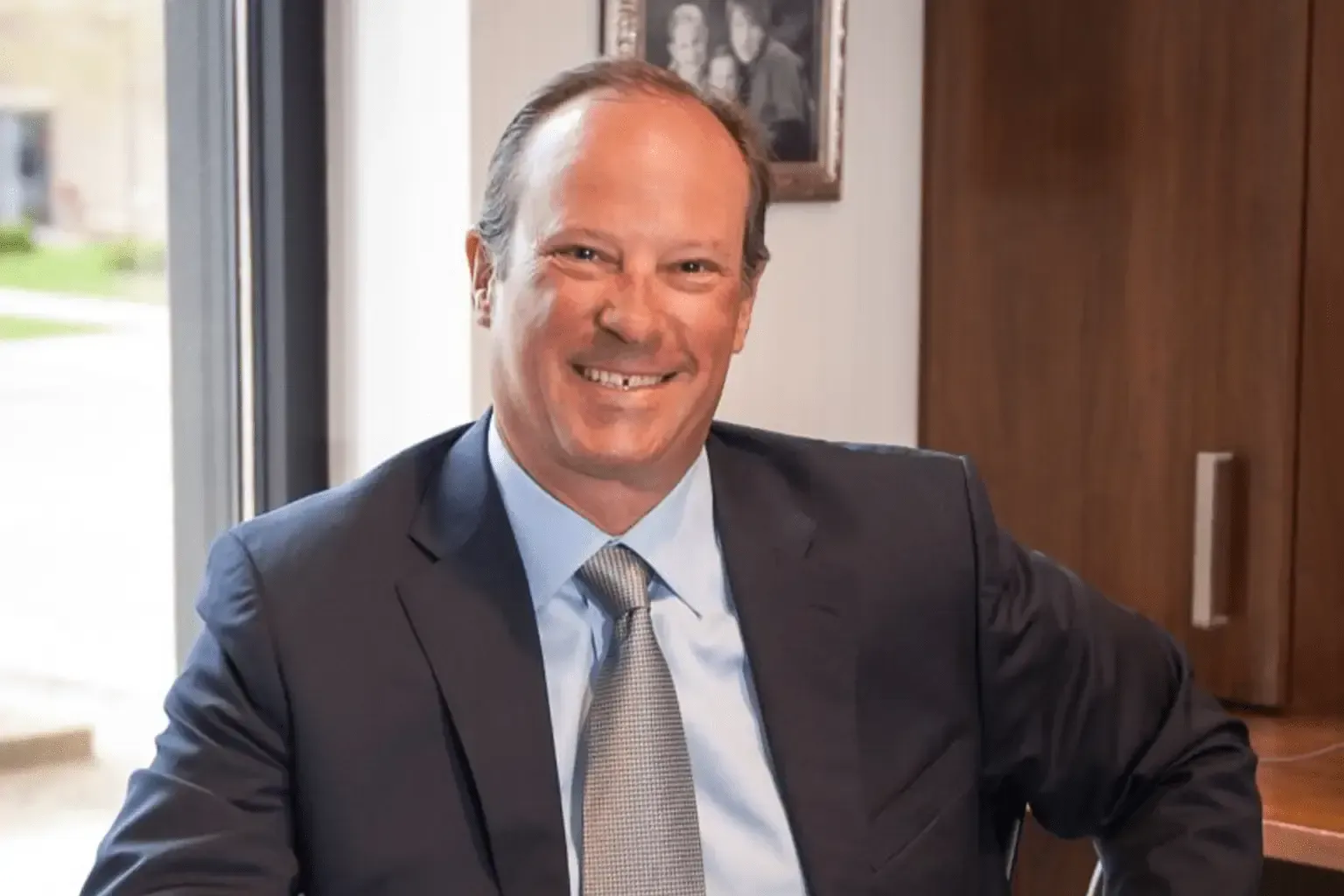
Michael Schroeder
Michael Schroeder on Stop-Loss Captives, Empowering the Middle Market, and Fixing Healthcare Economics
Michael Schroeder founded Roundstone in 2003 with a straightforward question: if group captives worked in property and casualty insurance, why had no one tried them in health benefits? Two decades later, that idea has become one of the most effective funding models for mid-sized employers. In conversation with Mehul Agarwal, Founder of HealthCompiler, Michael shares how Roundstone got here and where the market is headed.
A Captive Model Born Outside Healthcare
Michael didn't start in healthcare. After law school, he moved to the business side of insurance, working with self-insured pools for workers' comp, medical malpractice, and auto liability. Each time, the same three benefits showed up: information, control, and cost savings.
"I was kind of surprised to discover that it had never been introduced to health insurance," Michael says.
That gap became Roundstone. The idea was to create a shared risk pool for employers' health plan exposure, specifically through stop-loss insurance, and deliver those same three benefits.
For the first eight years, the market wasn't ready. Employers found it interesting but didn't feel enough pain to switch. Then healthcare reform arrived, costs started climbing fast, and demand took off. Today, for employers with 50 to 500 employees, the stop-loss captive is widely seen as a top funding choice.
How the Layer Cake Works
Michael explains the model through what Roundstone calls "the layer cake." It splits claim risk into three parts.
The first layer is the employer deductible, typically $25,000 to $200,000 based on the employer size. This covers about 65% of annual spend, so when an employer cuts costs, they keep 100% of the savings in this layer. The second layer is shared across all captive members, smoothing out volatility. Surplus funds get returned to employers. The third layer is catastrophic reinsurance, for the occasional and highly unusual seven- figure claims, purchased at scale so it stays affordable.
The result: middle-market employers can buy health insurance the way Fortune 500 companies do, with layered risk, full transparency, and direct rewards for managing well.
Where the Savings Are
Pharmacy costs tell the story clearly. Michael points to recent numbers: a national BUCA plan reported per-member, per-month pharmacy costs of $450. Roundstone customers using the company's preferred PBM sit at $220. For a 100-employee firm, that gap adds up fast.
Cash pay for scheduled care is another growing opportunity. A knee surgery priced at $20,000 through a traditional network might cost $7,500 at an independent surgery center. Transparency tools now let employers and members shop on quality and price.
Data Opens the Door
Without visibility into claims, employers can't manage costs. Michael shares a telling example: one prospect received Roundstone quotes for five straight years before finally signing up. The breaking point wasn't a savings pitch. It was getting hit with double-digit premium increases year after year with zero explanation.
Data changes that equation. It shows where costs are coming from and where to focus. Michael considers it one of the three core benefits of the captive model.
A Market in Motion
The shift toward self-funding is accelerating. Michael cites a McKinsey report from the prior year showing 4 to 5 million members leaving the fully insured market for self-funded programs in 2024, with projections of 7 million in 2025. National health plans have started approaching Roundstone to form captives of their own, a clear sign they see the writing on the wall.
The broker market is also evolving. Michael segments advisors into three camps: status quo brokers adapting reluctantly, advocates driving the change, and a newer generation embracing consulting and growing fast. With the average broker age at 58, a generational shift is underway. Roundstone invests heavily in educating this market on how to evaluate and choose a strong stop-loss captive.
Busting Misconceptions
Several myths slow down adoption. One is that self-funding requires more staff and more work; Michael says that's false.
Another is that retaining risk is inherently more dangerous than paying a fixed premium. He argues the opposite: fully insured employers have no insight, no control, and no way to influence next year's increase.
The misconception that frustrates him most is the belief that healthcare costs simply can't be managed. Roundstone's own employees have experienced just one cost-share change in 12 years.
“We’re proof that it works. If our own team can run a stable, predictable health plan for years without constant cost-sharing changes, other employers can do it too.” he says.
The Five-Year Guarantee
Roundstone backs its model with a five-year savings guarantee. Each year, the company's 20/20 report compares projected versus actual spend and benchmarks against what the employer was quoted before joining. Over five years, the cumulative cost has always come in lower. The typical client saves around 20% annually.
In dollar terms, a 100-employee company paying $16,800 on a traditional plan versus $11,000 on Roundstone's preferred model saves over half a million dollars a year.
Looking Ahead
Michael wants to change how employers measure success. Instead of celebrating renewals in percentages, he wants them thinking in per employee per year (PEPY) cost and knowing what a well-managed plan should cost.
More broadly, he sees a future where basic economics finally arrives in healthcare. Buyers and sellers who know the price. Quality metrics that are transparent. Financial incentives for smart choices. For a trillion-dollar industry still missing these fundamentals, the opportunity is enormous.
The captive model, flexible by design, will keep serving as the platform underneath whatever comes next. Whatever the next big innovation turns out to be, he's confident the captive will support it.
Do you have any other questions?