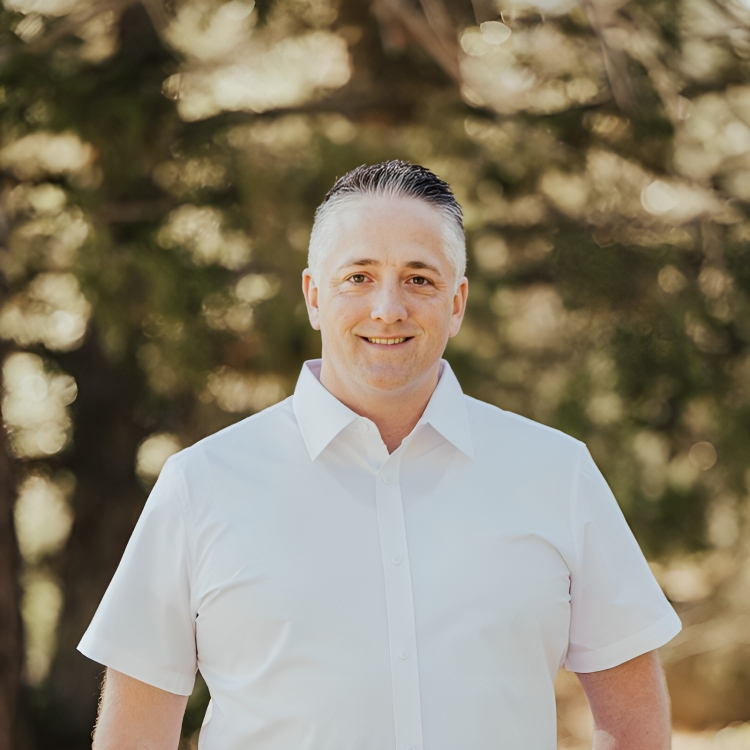
Nathan Udy
Nathan Udy on Building Trust, Scaling Care, and Why DPC Is Foundational
Nathan Udy comes from the financial and insurance side of healthcare, with more than two decades of experience building organizations that support how healthcare is financed and administered. Over the course of his career, he has worked across brokerage, third-party administration, risk management, captives, employer health plans, with a consistent focus on simplifying complex systems.
In this conversation with Mehul Agarwal, Founder of HealthCompiler, Nathan reflects specifically on Planstin Administration and Zion HealthShare, two organizations he built and now serves as Board Chair.
Planstin Administration was designed to support employer health plans and individuals. The focus, Nathan explains, has always been operational clarity, reducing friction, simplifying administration, and making health plans easier to manage over time.
“I’ve built an ecosystem of solutions for clients over the years,” he says. “The goal has always been to simplify the process and make it easier for people to manage healthcare.”
At Planstin, that work shows up in building the structure that allows plans to function without unnecessary obstacles.
“We provide the framework and backend support to make it really simple for a plan to exist and be managed,” he says. “From onboarding to managing their benefits on a day-to-day basis., we try to take away the barriers.”
One of the most persistent barriers, he notes, is stop-loss.
“Stop-loss often becomes a gatekeeper,” Nathan explains. “You normally get a company that will decline or rate up or just not make the proper business decisions.” Planstin has that capability inside its ecosystem.“Having the stop loss coverage inside the system removes the additional barriers for getting a health plan,” he says.
Why Direct Primary Care Became Foundational
Working closely with the mechanics of healthcare is also where Direct Primary Care began to take on greater significance.
Early on, DPC appeared to be one component within a broader ecosystem. Over time, its impact became harder to ignore.
That understanding carried directly into Zion HealthShare, which today serves roughly 75,000 members. From the beginning, Direct Primary Care played a central role in how Zion supported its community, shaping both the member experience and the overall structure of care.
“You really can’t build a health share without understanding DPC,” Nathan explains. “They’re so intertwined.”
What stood out was not just access, but the downstream effects. By leaning into DPC relationships, Zion saw stronger continuity of care, more predictable utilization, and fewer surprises across the community. Members had clearer entry points into care, and physicians were able to manage issues earlier and more directly.
As Zion grew, those effects became visible in the data.
“We saw how much it influenced the journey for members,” Nathan says. “And we saw how it helped keep rates stable and predictable.”
For Nathan, that experience clarified DPC’s role. It wasn’t simply a referral channel or a convenience feature. It was a stabilizing force within the health share model, aligning incentives across members, providers, and the broader community.
Trust Is Built by Doing
In an industry where skepticism is common, Nathan believes trust isn’t created by messaging, it’s earned through execution.
“Anyone can say they’ll do something,” he says. “Trust is built by doing.”
He recalls that when Zion entered the health share market, the industry standard for processing medical needs was around six months.
“We said we could process medical needs within a week,” Nathan says. “People didn’t believe it.”
They proved it anyway.
Members began sharing their experiences publicly, and word spread, not because of marketing campaigns, but because expectations were met.
“That snowballed,” he says. “People saw that we actually did what we said we would do.”
How TPAs Must Evolve
From Nathan’s perspective, not all TPAs are approaching the evolution of their role in healthcare the same way.
“There are TPAs that are stuck in the past,” he says. “And there are TPAs moving toward the future.”
The difference, he argues, comes down to willingness to challenge the status quo, especially around legacy networks.
“What makes me sad is how many TPAs just want to process transactions,” Nathan says. “They don’t want to do something different.”
At Planstin, that difference shows up in a willingness to move away from traditional networks and lean into cash rates when they’re better for members and the plan.
“Walking away from that cash cow is hard,” he admits. “But it’s the right thing to do.”
Technology and Data as Foundations
Technology, for Nathan, isn’t optional, it’s foundational.
“There’s too much complexity and too much data to do this manually,” he says. “If you don’t have a scalable technology platform, you can’t focus on what actually matters.”
Planstin has invested heavily in technology to support scale, decision-making, and operational clarity. Data, in particular, plays a central role.
“I’ve never seen good data hurt a plan,” Nathan says. “But I’ve seen not having data cause a lot of problems.”
For him, data enables better decisions for every stakeholder, from employers to members to administrators.
Looking Ahead
After decades in the healthcare industry, Nathan remains open to learning and collaboration. He sees the ecosystem evolving, with more alignment between TPAs, DPCs, technology platforms, and data partners.
“I’m always open to learning about solutions in the industry,” he says. “That’s how we make things better.”
For Nathan Udy, the work continues to come back to the same principle: build systems that do what they say they will, and earn trust by delivering, every time.
Interested to share your story?
Contact us today & Let us know!