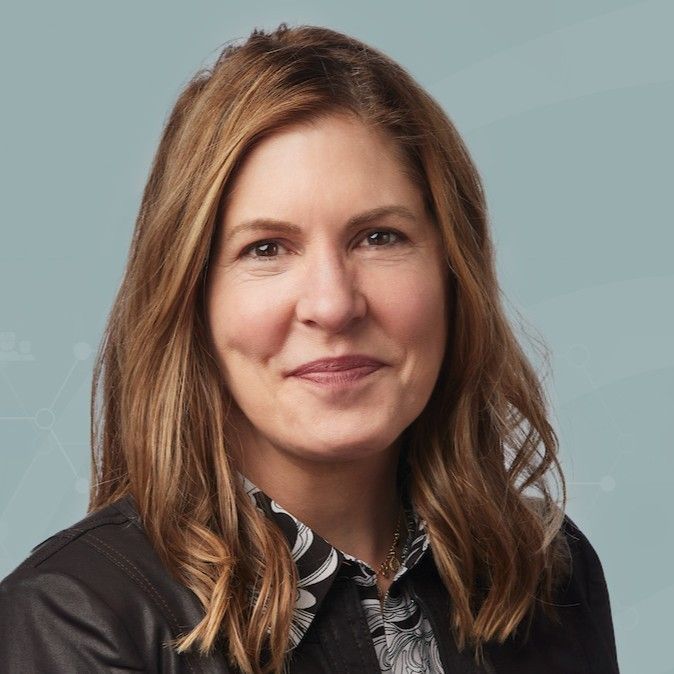
Tamara StClaire
Tamara StClaire on Reimagining Primary Care Inside a Health System
Tamara StClaire has spent three decades in healthcare, but her path into the industry didn’t begin in a clinic or a boardroom. It started in a chemistry lab.
With a PhD in chemistry and early research focused on drug metabolism, Tamara began her career building assays in a large reference lab. But what pulled her toward the business side of healthcare wasn’t just science, it was the market.
“When sales teams took me out to visit customers, hearing what they needed and wanted was even more exciting than developing assays,” she says. “That connection to real needs pulled me toward the business side.”
That shift led her through leadership roles at large healthcare organizations like Roche, Abbott, Xerox Healthcare, GuideWell, and Florida Blue, along with several startups. Over time, her focus became consistent: understand what assets an organization has, where it sits in the ecosystem, and what it should bring to market to solve real problems.
Most recently, that focus brought her to MaineHealth, where she is helping build an advanced primary care model inside a large hospital system.
The Structural Problem: Payment
When asked by Mehul Agarwal, Founder of HealthCompiler, about the biggest structural issue in healthcare, Tamara points to the payment model.
“The fee-for-service model makes it very difficult for providers to do what they think is the right thing because they don’t get paid for it,” she explains.
Follow-ups after ER visits. Checking if medications were filled. Helping coordinate imaging. These improve outcomes but aren’t reimbursed under traditional models.
Capitated models change that dynamic. Providers are paid per member, not per visit, which gives them flexibility to focus on prevention and continuity.
“It gives you a lot more flexibility in doing what you think is right,” she says.
Building from a Clean Sheet
At MaineHealth, Tamara was involved in developing an advanced primary care practice. That work led to the creation of Trellis Health, a subsidiary primary care practice designed to operate under a different care and payment structure than traditional primary care clinics.
The idea originated with MaineHealth CEO, Andy Mueller, a primary care physician who had been hearing from clinicians about burnout and the constraints of fee-for-service care. His question to the team was simple: what would primary care look like if it were designed from scratch?
“What if we just blew it all up and started over again?” Tamara recalls.
Primary care physicians helped shape the model from the beginning. The team developed the concept, wrote a white paper, and then moved to implementation. Within a year, the first practice opened and began seeing patients.
Tamara calls it “speed to credibility.” Moving fast helped earn internal trust and prove the concept could work.
Why the Shift To Capitation Isn’t Simple
Tamara notes that moving to capitation isn’t just a mindset shift, it’s an operational one.
Government programs often have to push payment reform forward, and even then, infrastructure lags. Many payers still don’t have the internal systems to administer capitated models.
She explains that in their advanced primary care model, patients can enroll through employer-sponsored benefits or as a retail option that resembles direct primary care. The employer model works especially well for self-insured groups because incentives align around lowering total cost of care.
The backend remains the tougher challenge. Early pilots required creative workarounds, including processing “synthetic claims” just to track utilization.
“That infrastructure isn’t really built yet for these models,” Tamara notes.
Her view is pragmatic: the industry is in transition. As more care moves into ambulatory settings, she sees a natural opening for capitation to grow alongside it.
The shift won’t happen overnight, it will take time for the system to catch up to the model.
What Employers Actually Want
For employers, the priorities are surprisingly straightforward.
“Access,” Tamara says. “That’s the first thing they ask about.”
Many employees still struggle to find a primary care physician. MaineHealth’s model focuses on same-day access, 24/7 availability, and resolving most issues quickly.
Affordability follows close behind. Self-insured employers are under pressure to manage total cost of care, and advanced primary care can help bend that curve.
Technology plays a supporting role. About 75% of patient encounters are virtual or asynchronous, driven by convenience rather than design. Engagement averages around 20 touches per member per year, which would be impossible without digital tools.
The goal is not a flashy “digital front door,” but technology that brings sustained engagement over time.
A Shift Already Underway
Tamara has also watched the rapid rise of Direct Primary Care. In Maine alone, dozens of DPC practices have emerged in a short period.
She sees this as a response to both physician burnout and patient demand for access.
“If your employer or health system can’t help you find a primary care physician, people will take it into their own hands,” she says.
For Tamara, the takeaway is clear: primary care has the power to redefine the healthcare system. Much of what comes next depends on how organizations choose to invest in it.
Do you have any other questions?